

Compostela and the Measure of Progress
You seldom hear much about the smaller towns of Cebu. Local headlines tend to gravitate toward larger cities and municipalities, often when controversy is involved. Quiet places rarely make the news.
Compostela is one of those places.
With a population of just over 58,000 spread across 17 barangays, it remains a relatively small municipality by Cebu standards. My wife and I moved here only a year ago from Cebu City, with no prior connection to the town, its politics, or its officials. We arrived simply as newcomers looking for a different pace of life.
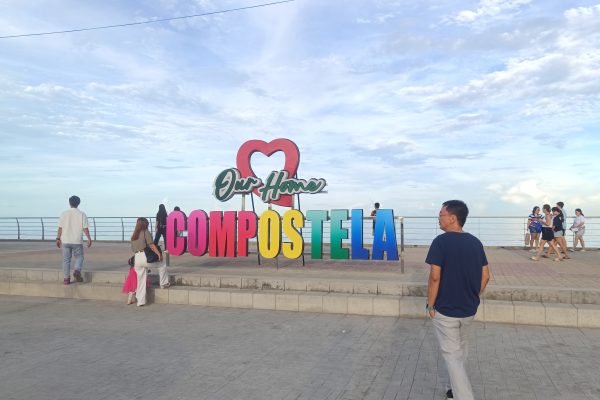
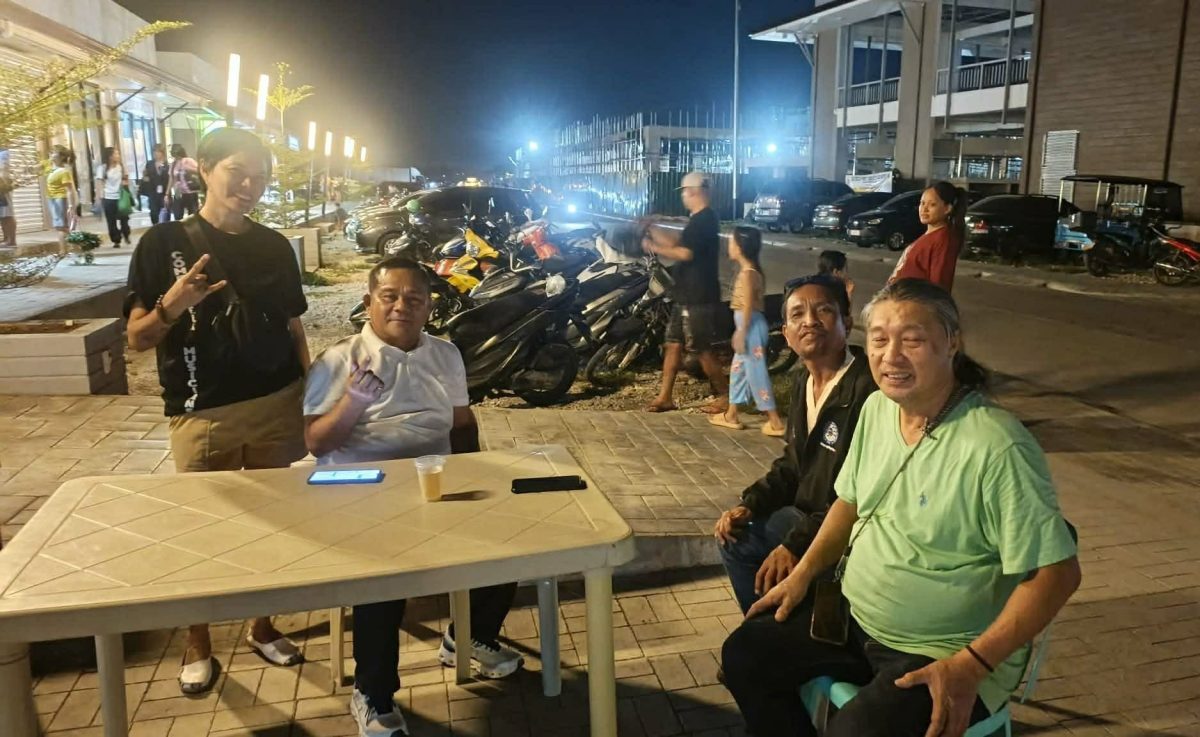
Recently, we visited the town’s boardwalk to support fellow artists and musicians who were busking for a cause. It was a modest community gathering with no grand stage, no elaborate program, and little fanfare. As the sun began to set, we strolled along the waterfront and noticed a man standing quietly by himself along the pathway.
It was the mayor.
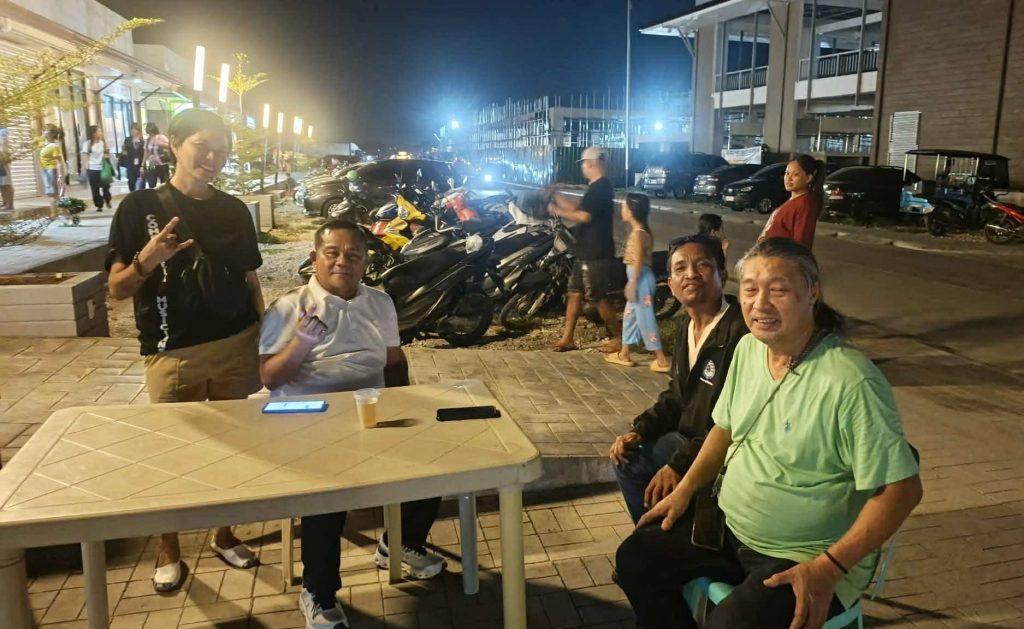
*Photo: Courtesy of Compostela Musika
There were no bodyguards, no entourage, and no barriers separating him from the public. My wife and I approached him without difficulty. He seemed deep in thought, simply observing the activity around him. As people passed by, many greeted him casually. Some elderly residents exchanged pleasantries, while younger people paid their respects in the traditional manner of “mano po.”. In a small town, everyone seems to know everyone.
What struck me was not that he was there, but how ordinary the moment felt.
Search for Mayor Felijur “Jury” Quiño online and you will find little of the fanfare that often accompanies public officials. There are no elaborate biographies or carefully curated public personas. There’s even no entry of him on Wikipedia. Whether intentional or not, his low-profile approach appears consistent with the image many residents have of him. It may explain why some locals refer to him as the “Mayor Na May Puso.”
Yet this is not really a story about the mayor. It is a story about what a public space can do for a community.
The boardwalk has become one of the town’s most vibrant gathering places. On any given afternoon or evening, one can see people from all walks of life sharing the same space. I saw a person in a wheelchair quietly enjoying the sea breeze. Children roller skating along the promenade. Local musicians performing for passersby. A drum and bugle corps rehearsing nearby while students and families gathered to enjoy the coastline.
From the boardwalk, one can even glimpse the distant skyline across the water, a reminder of the rapid urbanization occurring elsewhere in Cebu. Yet here, the atmosphere remains distinctly provincial.
Near the shore, young people swam in the municipal waters while others cast fishing lines into the sea. Schools of fish occasionally disturbed the calm surface. It was a scene that felt increasingly rare in a province where development often arrives faster than communities can adapt.
Long before the boardwalk, the heart of Compostela revolved around its traditional town center, anchored by the historic Señor Santiago Parish Church. Residents still gather there in the evenings, preserving a rhythm of life that has endured through generations.
The people of Compostela seem to have retained that easygoing character often associated with provincial life. There is a simplicity and sincerity to the place. In many ways, the town reflects the personality of its residents more than the ambitions of its politicians.
Of course, Compostela is not without challenges. Like many municipalities, it has experienced its share of political disputes and controversies. The mayor himself has acknowledged that criticism comes with the territory. Whether one agrees with his politics or not, there appears to be a conscious effort to focus on practical governance rather than endless political conflict. While local politics can often become divisive, Compostela seems intent on keeping development and public service at the forefront.
Despite limited resources, the town has managed to attract investments, including industrial facilities and food-processing enterprises that provide employment opportunities. Development may not be happening at the pace seen in larger urban centers, but it is steadily taking shape.
Quarrying activities are also visible in parts of Compostela’s upland areas, supplying construction materials that support infrastructure projects in neighboring municipalities and Cebu City. Like many industries tied to development, quarrying presents both challenges and responsibilities. It contributes to local economic activity and provides materials essential for roads, buildings, and public works. At the same time, its long-term impact depends on how responsibly operations are managed and how seriously rehabilitation efforts are pursued once extraction is completed.
For a town that takes pride in its natural surroundings, from its coastal waters to its mountainous hinterlands, environmental recovery should be viewed as part of the development process rather than an afterthought. Reforestation, land rehabilitation, mitigating air pollution and other restoration measures can help ensure that economic gains today do not come at the expense of future generations.
At the same time, reminders of a more traditional economy remain visible. Along some roads, one can still see residents producing charcoal, with thick smoke rising from makeshift kilns. It is a livelihood born of necessity, reflecting both the resilience of local communities and the economic realities many families continue to face.
Compostela has yet to experience the commercial expansion seen in larger municipalities. There are still no major shopping malls, although a local supermarket chain has begun establishing a presence in town. Development is coming, but at a measured pace.
Perhaps that is what makes Compostela interesting.
It is a town attempting to move forward without entirely abandoning what makes it unique. The challenge for local leaders is not simply to attract investment, but to ensure that progress improves the quality of life of residents while preserving the natural environment that sustains the community.
The boardwalk itself serves as a small but meaningful example. Public projects often receive attention when they are inaugurated, but their true value depends on whether they are maintained and continue serving future generations. One hopes that the local government will preserve and improve this space rather than allow it to fall into neglect, as has happened elsewhere.
Compostela is not perfect. Neither is its government. Yet there is something refreshing about a town that remains peaceful, accessible, and grounded while pursuing development on its own terms.
In an era when growth is often measured solely by concrete, commerce, and construction, Compostela offers a reminder that progress should also be measured by the well-being of its people, the strength of its communities, and the stewardship of its environment.
Development and environmental protection need not be opposing goals. If Compostela can continue balancing both, it may prove that even a small town can offer valuable lessons in how growth should be pursued, thoughtfully, inclusively, and with an eye toward preserving the qualities that make a place worth calling home.